Slack and Jira Integration: Step-by-Step Guide
 Sian Bennett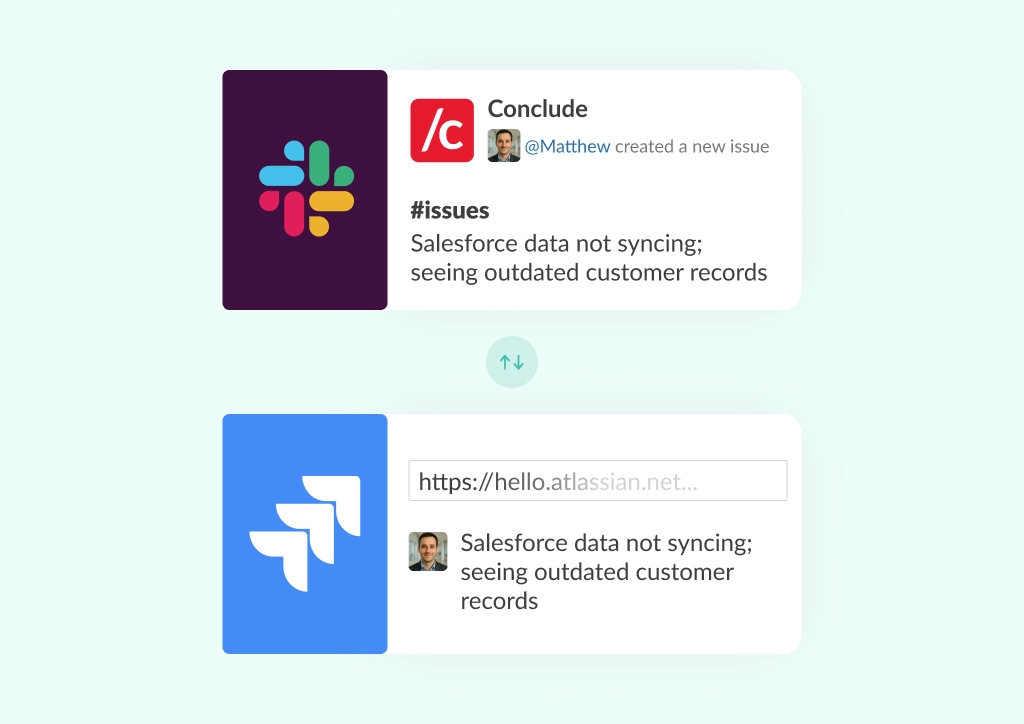
Slack and Jira are two popular tools used by knowledge workers, but they don’t automatically work together. To make them effective for issue, task and ticket management, teams need a reliable Slack Jira integration.
Without this, teams waste time switching between platforms, copying updates manually, and potentially missing critical information. These inefficiencies can lead to delays, miscommunication, or lost tickets.
In this article, we break down the benefits of integrating Jira and Slack, how different teams use this connection to streamline issue tracking, and provide a step-by-step guide for how to set up Conclude’s Jira integration – also available for Microsoft Teams.
TL;DR: Slack–Jira integration in a nutshell
Integrating Slack with Jira helps teams manage issues and updates without switching tools. You can:
- Create and update Jira tickets directly from Slack (syncs bi-directionally)
- Get instant notifications on issue progress, mentions, and status changes
- Connect Slack messages, files, and comments to Jira tickets for full context
- You can also work on Jira issues across Slack and Teams using Connected Apps
Want to learn more? Sign up here to try Conclude free for 14 days.
Benefits of Integrating Slack and Jira
Switching between Jira and Slack just isn’t efficient. Without an integration, teams often copy and paste updates between platforms, increasing the risk for lost or outdated information. This slows down issue resolution times and makes tickets harder to manage.
By integrating Slack and Jira, teams can boost productivity, improve communication, and streamline incident and issue management. Whether you’re working in engineering, support, or operations, a smart integration reduces context switching and keeps everything in sync.
Here are some of the main reasons teams connect Jira with Slack:
Real-Time Notifications
Team members want to receive updates directly in Slack, e.g., when a Jira issue is created, updated, commented on, or its status changes. Real-time alerts reduce the need to check Jira manually, ensuring everyone stays informed and can respond quickly to changes.
Centralized Information
Integrating Slack and Jira means that information can be easily shared and discussed in Slack. This reduces the risk of missing or duplicating critical information, keeps stakeholders in the loop, and ensures conversations don’t get lost across platforms.
Improved Collaboration
Teams – especially IT teams – often use Slack for communication and Jira for project management and issue tracking. By connecting both, team members can collaborate on Jira issues in Slack, leading to faster decisions, and clearer communication.
Task Tracking in Slack
Managers and team leads can monitor project progress without leaving Slack. A Slack and Jira integration allows for better visibility into issue updates, blockers, and priorities. This also helps leadership stay on top of timelines and deliverables without too much context switching.
Boosted Productivity
With Conclude’s Jira integration, users can create a Jira ticket from Slack with all comments and information syncing bi-directionally. This eliminates the need to switch between tools and push updates manually, so teams can move faster with fewer interruptions.
How to Use a Slack and Jira Integration for Different Teams
The benefits of connecting Slack and Jira aren’t limited to just one department. Whether it’s developers tracking bugs or support agents logging customer issues, an integration helps everyone work faster and stay aligned.
Learn how to create a Jira ticket from Slack to get started quickly or see our Jira Quickstart Guide.
Below are some common use cases across different types of teams, each with its own priorities and workflows:
Software Development Teams
Engineering teams often juggle coding, bug tracking, and new feature requests – all while collaborating across time zones. A Jira and Slack integration streamlines these tasks by allowing developers to track tickets, receive real-time issue updates, and discuss blockers without leaving Slack. This reduces context switching and helps developers stay focused on code.
Customer Support Teams
Support teams need to capture customer requests and feedback efficiently. By integrating Jira with Slack, they can create new Jira issues from Slack messages, ensuring nothing is lost in transit. This makes it easy to log tickets during live conversations, respond faster, and keep communication aligned with back-end tracking.
IT Operations Teams
For IT teams managing incidents, issues, or internal support, a Slack and Jira integration is a must. When an issue is raised in Slack, it can be immediately converted into a Jira ticket and assigned, with ongoing status updates visible to the team. This keeps everyone aligned and eliminates manual follow-ups.
Project Management Professionals
Project managers often work between strategy, execution, and stakeholder reporting. A good Slack and Jira integration helps centralize communication about timelines, blockers, and deliverables. Project changes or ticket updates discussed in Slack can be synced to Jira in real-time, giving PMs a clearer picture of what’s happening without having to chase updates.
Product Management Teams
Product managers are responsible for aligning customer needs with development priorities. Integrating Slack and Jira allows them to manage feature requests, product backlogs, and cross-team feedback in a more transparent way. They can quickly push a discussion from Slack into Jira, ensuring requests are tracked and actioned while maintaining visibility across the team.
Atlassian’s Jira Slack Integration
If you’re just getting started, you can connect Jira and Slack using Atlassian’s native integration tools. These are helpful for sending notifications to a Slack channel when a Jira issue is created or updated.
You can install the official Slack app for Jira via either platform:
- From Slack – go to the Slack App Directory listing for Jira Cloud
- From Jira – follow Atlassian’s setup guide to use Jira Cloud for Slack
Both of these are great options that should fulfil most of your needs – including creating Jira tickets directly from Slack.
If you want tickets to sync both ways in real-time, you may also consider Conclude’s integration, which includes additional ticketing options and functionality – not just limited to Jira issues and tasks.
Learn more about Conclude Apps for Slack and Connected Apps for cross-platform ticketing.
Conclude’s Jira and Slack Integration
If your team needs more than just basic notifications, Conclude’s Slack and Jira integration offers a flexible solution. It’s built for teams that work in Slack but manage projects and issues in Jira.
The Jira integration is part of Conclude Apps for Slack, and is compatible with Jira Cloud. Whether you’re logging customer issues, managing dev tickets, or aligning teams across functions, Conclude gives you more control over how your data is shared, tracked, and updated.
Conclude is also listed on the Atlassian Marketplace, so you can explore features and install directly from your Jira workspace. To see how it works, keep reading, or see the Jira Integration Quickstart Guide.
Conclude’s Jira and Slack Integration Features
Conclude’s Jira integration includes a growing set of features designed to support different use cases and team setups:
1. Fully Customizable
All of Conclude’s apps are designed with flexibility in mind and can be tailored to suit different teams and their specific needs – whether you’re running a fast-moving dev team or managing cross-functional projects. An optional expert mode is also available for advanced users, enabling you to configure logic using YAML for more granular control.
2. Real-Time Synchronization
Conclude’s integration supports automatic bi-directional syncing between Slack and Jira. You can create new Jira tickets directly from Slack using the quick command /c new, and any updates in Jira (such as comments or status changes) will automatically be reflected in Slack. Teams can work from their preferred platform with up-to-date information.
3. User Account Mapping
To avoid confusion across platforms, Conclude maps Slack users to their corresponding Jira accounts, even when user names or email formats differ. This automatic mapping ensures accurate tracking, eliminates manual errors, and keeps communication aligned, especially in larger organizations or distributed teams.
How to Connect Slack and Jira Using Conclude
Setting up the Jira and Slack integration is done directly through the Conclude Admin console. The process is guided and structured, so you can connect your tools without needing complex configuration or custom setup.
You can follow our Jira Quickstart Guide for a step-by-step walkthrough, or use the outline below to understand what’s required and how it works.
Getting Started
Before you begin, make sure you have the following:
- A Conclude account — get started here
- Access to the Admin console in Conclude
- A Jira Cloud account
- Jira admin permissions, or help from someone who can authorize the integration
- A Slack workspace where the app will be installed
Step 1: Turn on the Jira Integration
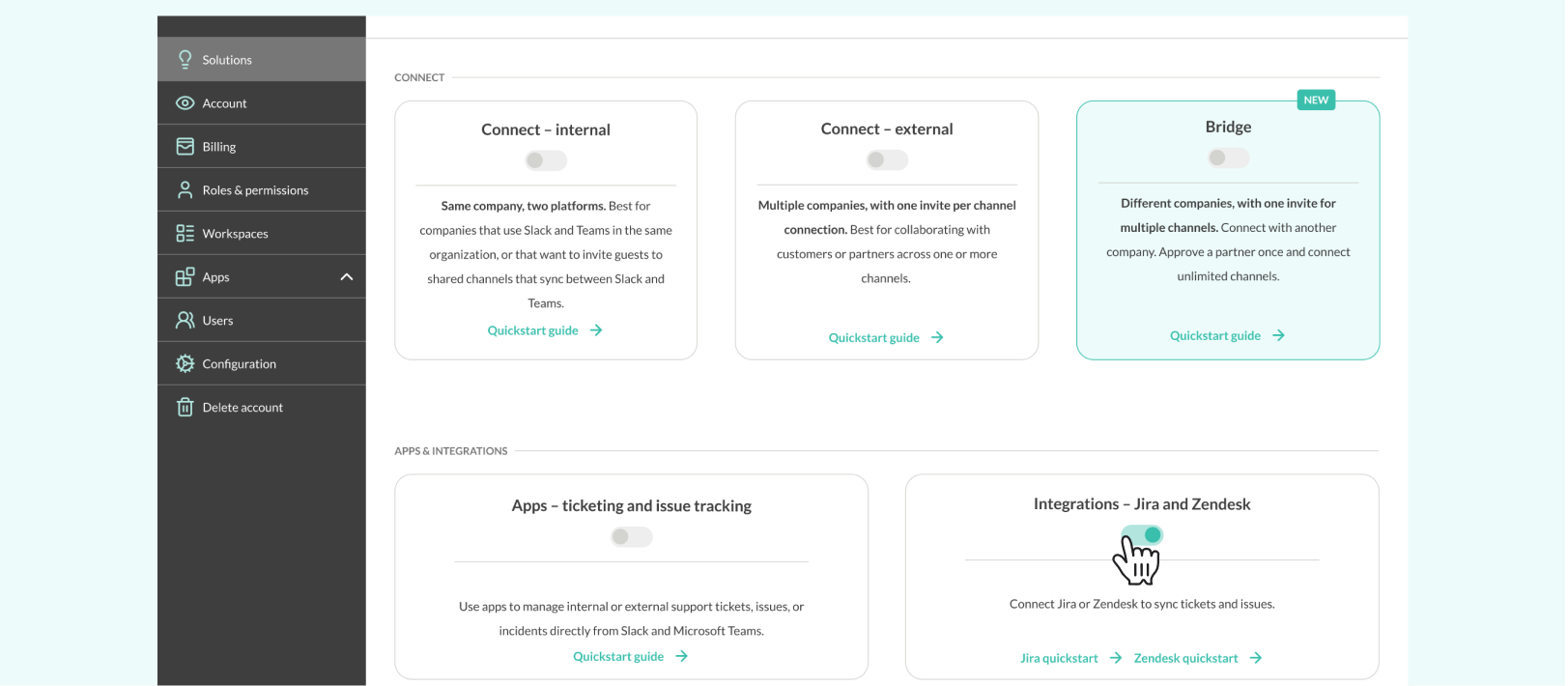
Start by enabling the Jira integration in the Conclude Admin console. Go to the Solutions tab and toggle Integrations – Jira and Zendesk to enable Jira. If the Apps – ticketing and issue tracking solution is not already automatically enabled, toggle this now.
Step 2: Select Jira in the Setup Wizard
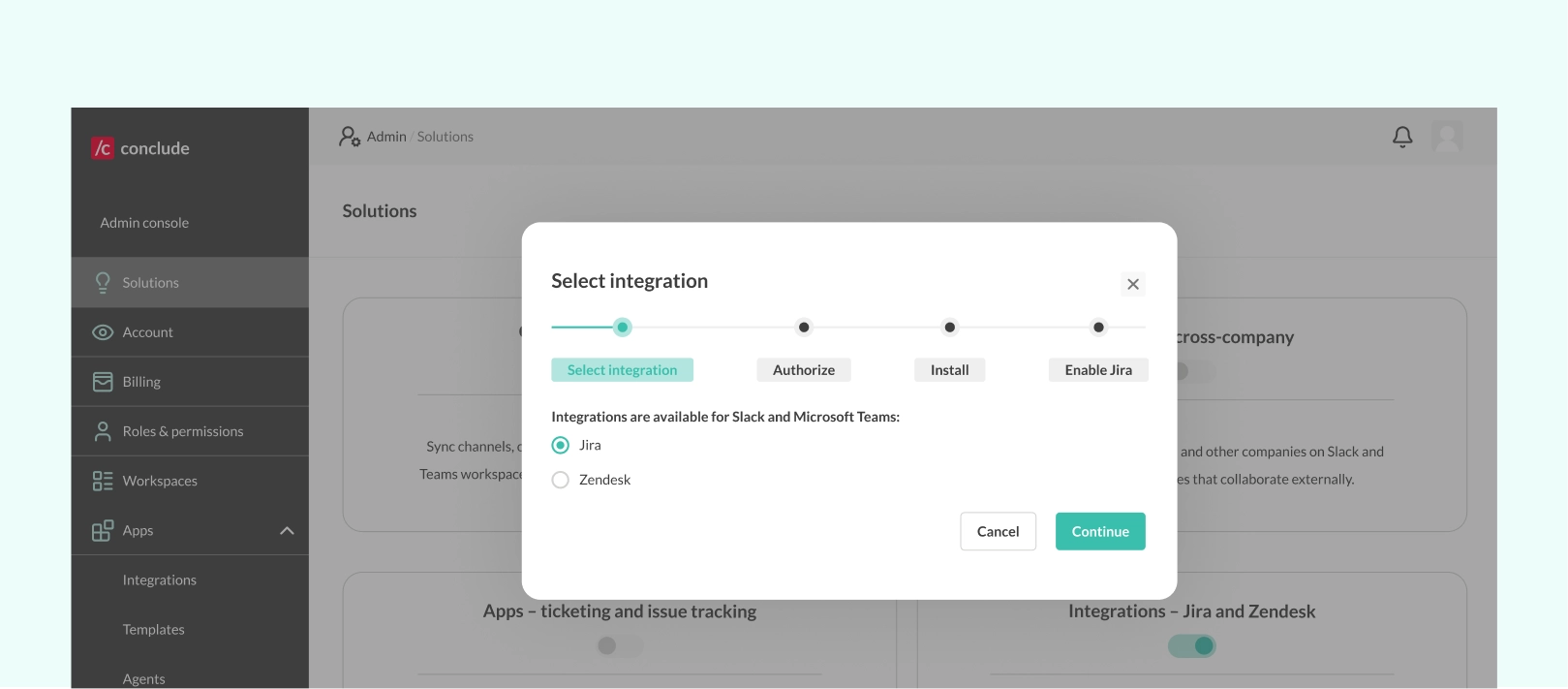
Once the integration is enabled, the setup wizard opens automatically to guide you through the connection process. Select the Jira integration and continue to the next step. If needed, you can also return to this later from the Integrations tab in the Admin console.
Step 3: Connect and Authorize Your Jira Account
Next, to connect your Jira account to Conlude, enter your Jira subdomain, making sure not to include https:// or .atlassian.net. After that, proceed with authorization, which will redirect you to Atlassian to grant Conclude access.
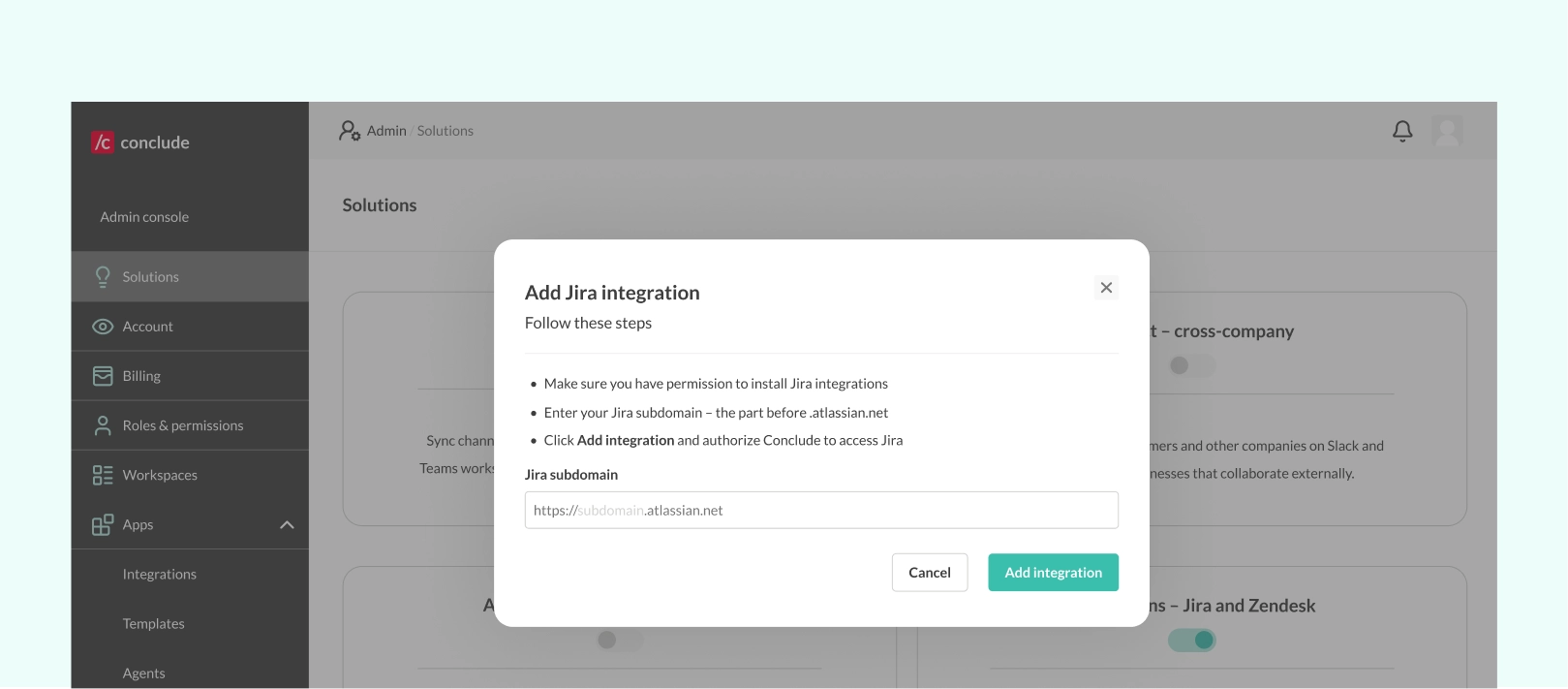
Step 4: Install a Conclude App
To start using Jira in Slack, install a Conclude app based on your workflow. You can use the Jira Integration app template, or choose another template, such as Bug Tracking or Incident Management, depending on what type of tickets your team manages in Jira.
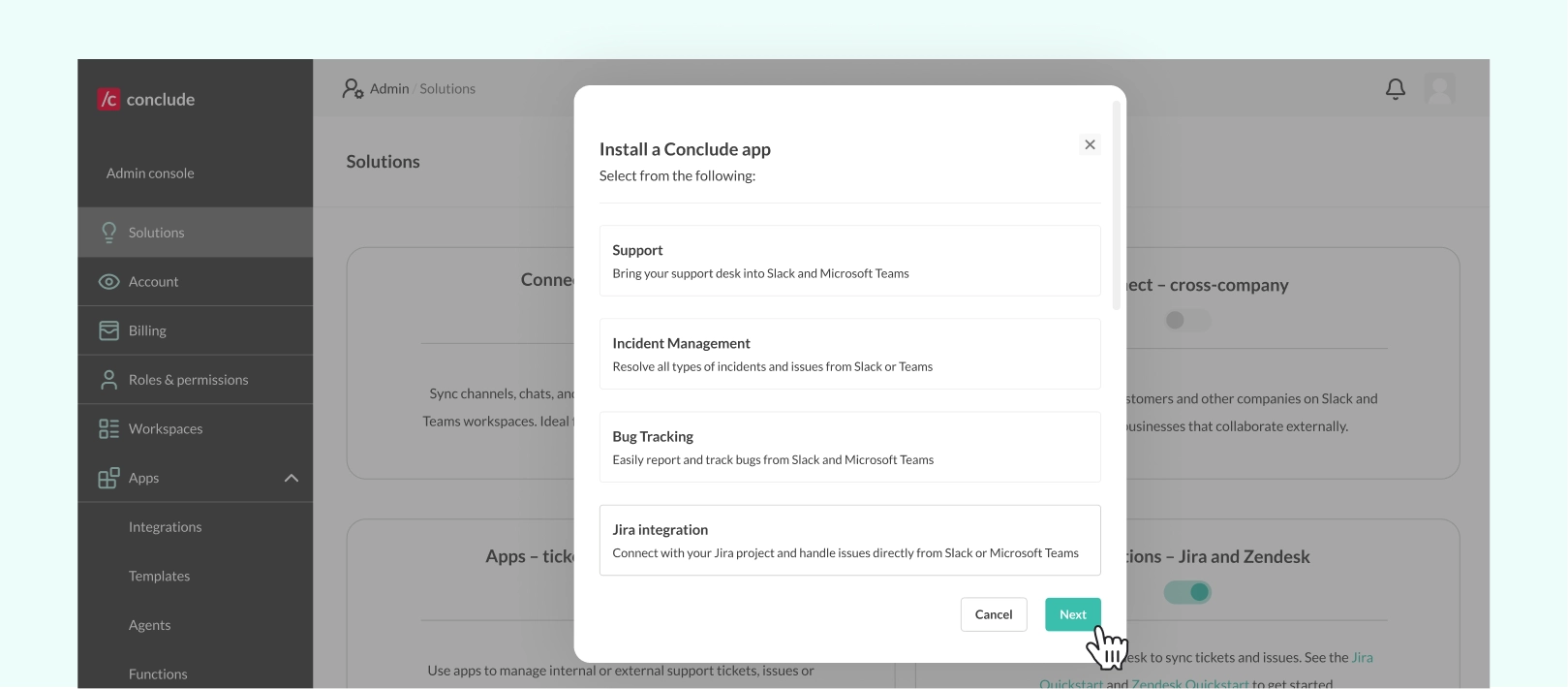
Each template is preconfigured to match a specific use case, so you can get started quickly without building workflows from scratch.
Step 5: Choose the Slack Channel and Enable Jira
Next, choose the Slack channel where you want the Jira integration to be active. Once selected, click Enable Jira integration to complete the setup and start managing Jira tickets directly from Slack.
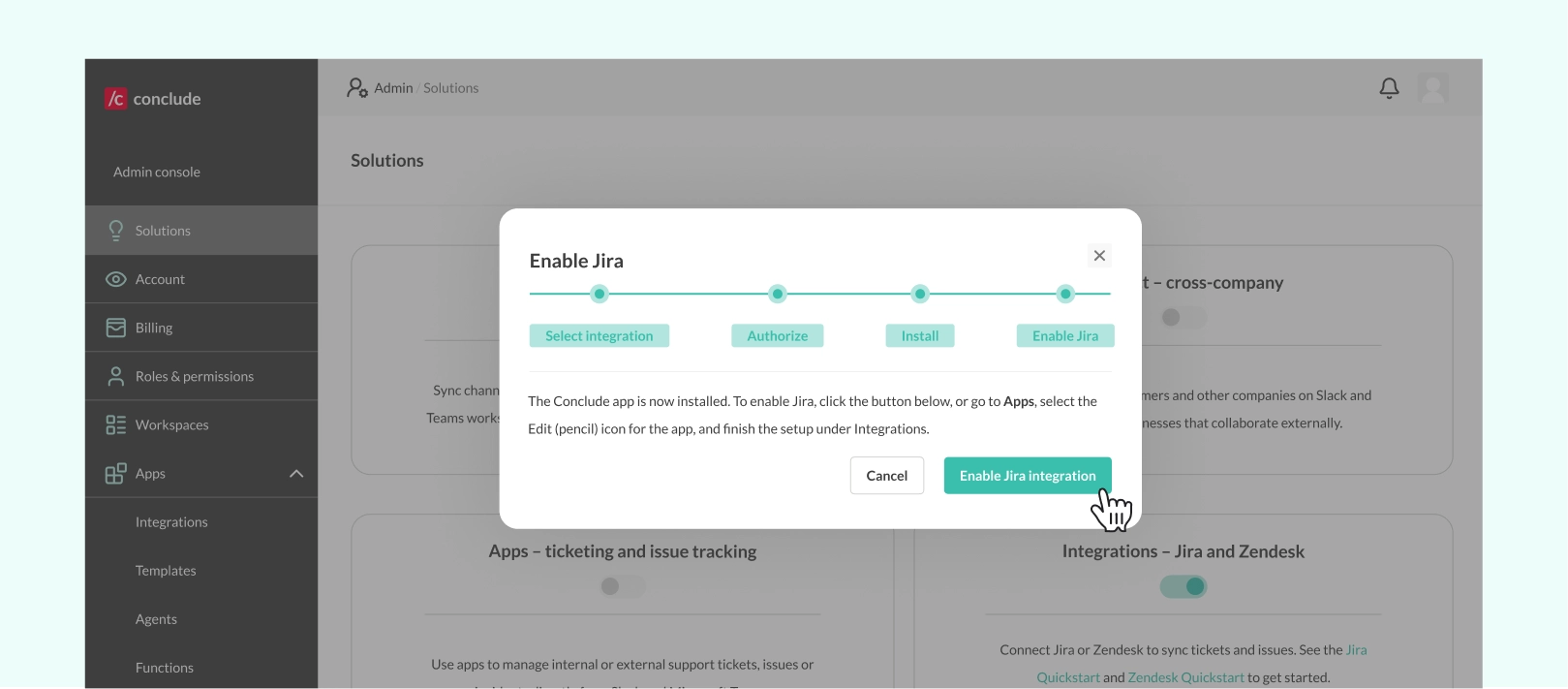
Step 6: Configure the Jira Project
After enabling the integration, you’ll be automatically directed to configure your Jira connection. Select the Jira project you want to sync with, then save your configuration to complete the setup.
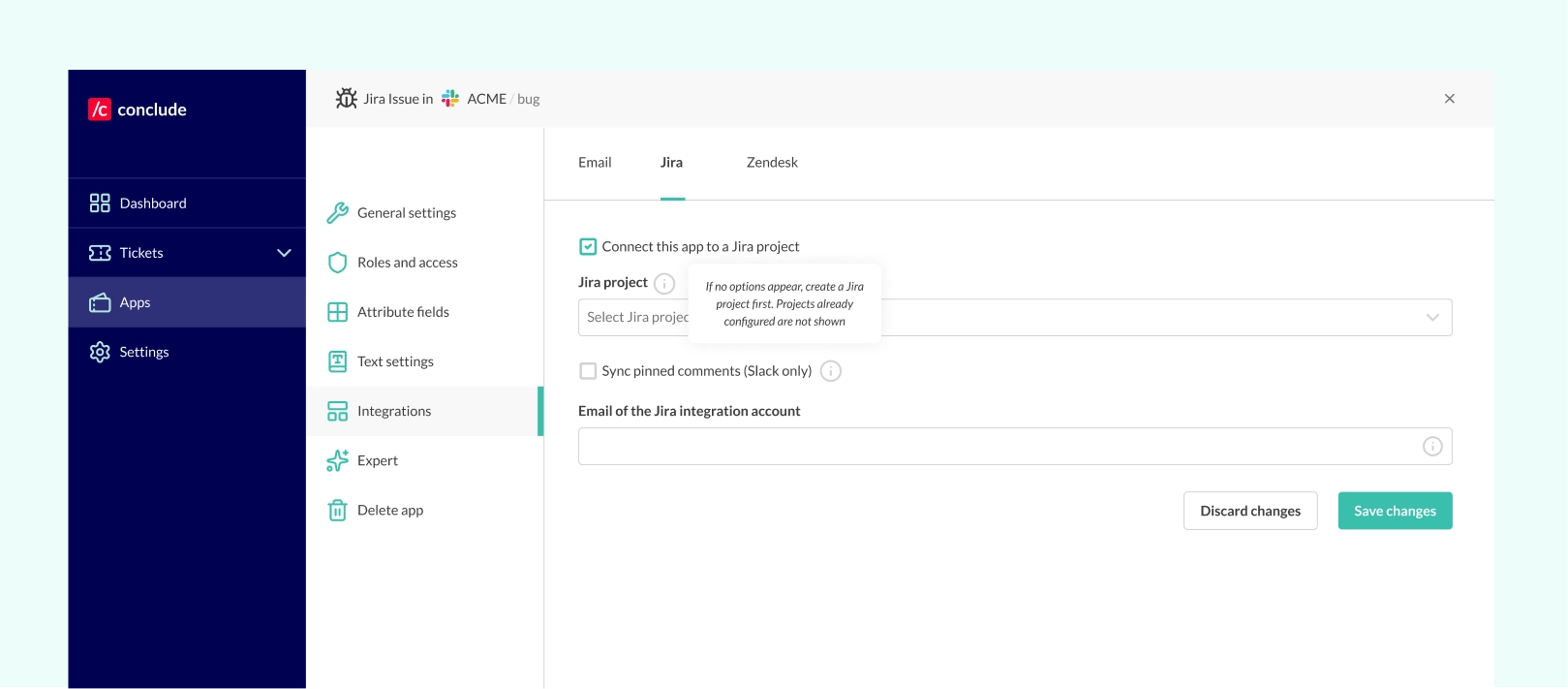
Step 7: Create a Jira Ticket from Slack
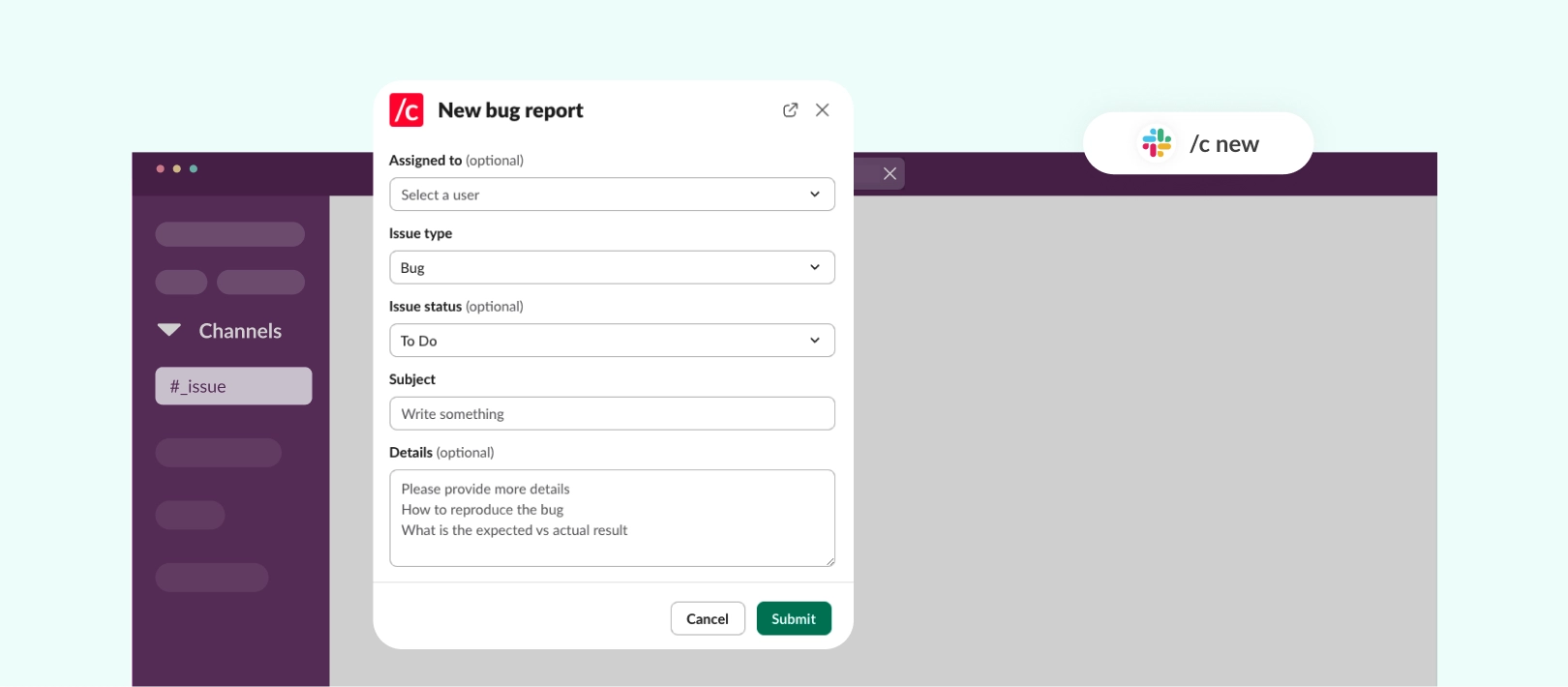
From Slack, create a ticket by typing /c new into the channel where the app was installed.
From here you can assign the ticket and set the severity without leaving Slack (you can adjust all app settings from the web dashboard). All tickets will be synced between Slack and Jira and remain visible in Conclude’s web dashboard. When you create an issue in Jira, this should show up in Slack immediately.
Troubleshooting Tips
If you run into issues during setup, a few quick checks can help.
In Slack, you can use commands like /c jira connections to review active Jira connections, or /c jira status to check whether the integration is working as expected. These commands can help you quickly identify if something isn’t configured correctly. See all Jira commands for Slack here.
If the issue persists, revisit your integration settings in the Admin console to confirm everything is connected and authorized properly.
User Accounts
To keep actions consistent between Slack and Jira, Conclude matches Slack users to their corresponding Jira accounts. For example, if someone comments on an issue in Slack, that comment is posted in Jira under their matched Jira identity. This ensures updates, comments, and actions are attributed correctly across both platforms.
If needed, you can configure or review how the integration account is used in your setup. For more details, refer to the Jira integration account documentation.
Key Takeaways
A strong Slack and Jira integration can significantly improve how teams manage issues, track tickets, and collaborate across functions. Whether you’re in development, IT, customer support, or product, connecting these two essential platforms helps reduce context switching, boost efficiency, and keep your team aligned in real time.
While native integrations between Jira and Slack offer basic functionality, using solutions like Conclude Apps or Connected Apps can unlock more powerful workflows, helping teams to become even more efficient. This includes creating Jira tickets from Slack (or from Jira and syncing to Slack) for better issue management from Slack, with bi-directional syncing and effective user mapping.
If you’re ready to streamline issue tracking, sign up free or book a demo.
Frequently Asked Questions
How do I integrate Jira and Slack?
You can connect Jira and Slack using Atlassian’s native integration or a third-party tool like Conclude. The native connector allows basic notifications, while Conclude enables full two-way sync between Jira projects and Slack channels. You can follow our Jira Quickstart Guide to integrate in minutes and start managing tickets directly from Slack.
What are the benefits of Slack Jira integration?
Integrating Slack and Jira keeps projects aligned in real-time. Teams can create and update tickets without switching tools, track issue progress in shared channels, and reduce delays from email or manual updates. The result is fewer context switches, faster resolution times, and clearer visibility across engineering, product, and support teams.
Can I create or automate Jira tickets from Slack?
Yes. With Conclude’s Slack Jira integration, you can create Jira tickets directly from Slack using the /c new command. You can also set default priorities or trigger actions such as changing status or assigning reviewers. See all Jira commands for Slack here.
Which Slack channels work best for Jira issue alerts?
It depends on your workflow. Many teams use dedicated channels (e.g. #issues or #bug-triage) for tracking, while others send Jira updates into shared project or sprint channels. Conclude lets you choose exactly where alerts appear and customize visibility, helping each team get only the updates that matter most.
Does Jira Cloud work with Slack?
Yes. Conclude fully supports Jira Cloud integration with Slack. You can connect Jira Cloud projects to Slack channels, create and update issues from Slack, and receive real-time notifications on ticket progress. Conclude extends Jira Cloud’s native capabilities with richer automations, contextual message linking, and customizable alert settings.