How to Unite Teams Across Slack and Microsoft Teams During Mergers and Acquisitions
 Conclude Team
 Sian Bennett
Mergers and acquisitions are complex, and communication is often one of the first areas to feel the strain. When two organisations merge, they rarely start with the same tools. When it comes to messaging, one company may rely on Slack, the other on Microsoft Teams, and leaders are quickly faced with the need to integrate Slack and Teams during a merger, even though changing platforms is rarely possible in the early stages of an acquisition.
During this period – often from pre-close through Day 1 and beyond – teams still need to work together. Leaders need visibility, projects need momentum, and day-to-day decisions can’t wait for a full IT migration. Without a way to connect Slack and Microsoft Teams, conversations become duplicated, updates are missed, and context is lost across platforms.
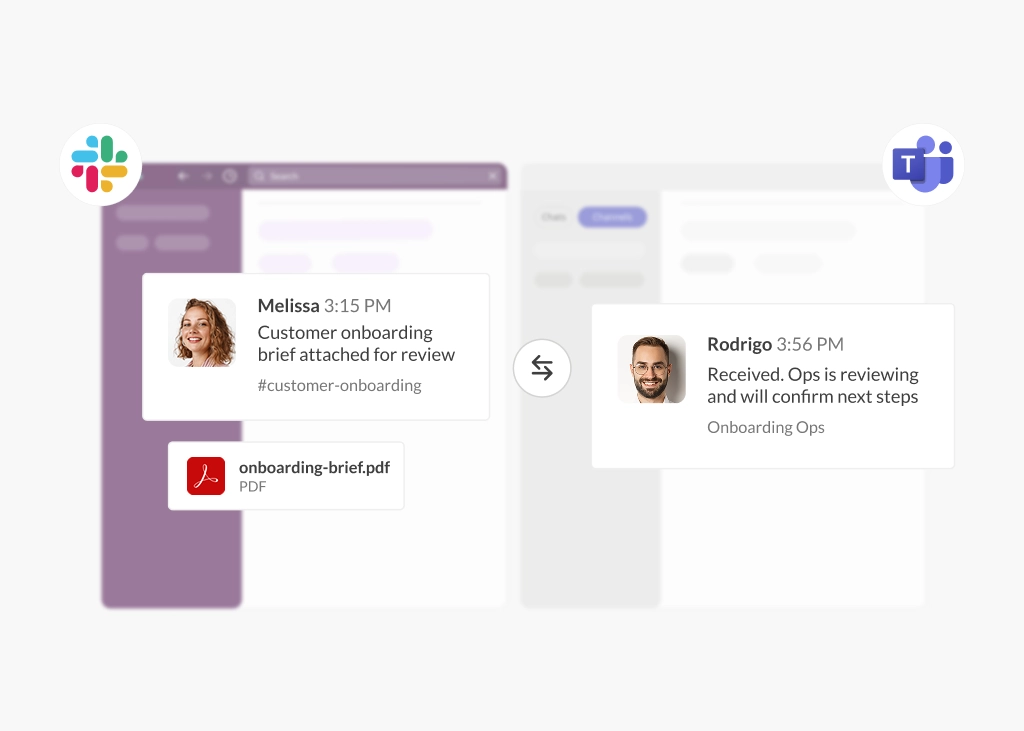
This is where Conclude Connect comes in. Conclude Connect links Slack and Microsoft Teams channels and chats, allowing teams to collaborate immediately without forcing a migration or disrupting existing workflows. Each team can continue using their preferred platform while communication stays aligned.
Before deciding whether or when to migrate tools, most organisations need a way to connect teams quickly and safely. In this guide, we look at what typically happens to communication tools during an M&A and why connecting platforms is often the first practical step.
Going through an M&A integration process? Conclude Connect can quickly unify your teams. Get started for free.
Why Communication Breaks During Mergers and Acquisitions
This scenario is common: acquired companies often run on Slack, while parent companies operate on Microsoft Teams (or vice versa). Both platforms have deep roots in their respective organizations and teams have built workflows and established habits around their preferred tool.
When two companies merge, teams end up split across platforms at a critical moment. Engineering teams stay on Slack, while operations and leadership may remain on Teams. This creates immediate M&A integration challenges, even before any broader system decisions are made.
Important updates get duplicated or lost because teams can’t see each other’s conversations in real-time. An important decision made in a Slack channel doesn’t reach the Teams side immediately. An IT or security update posted in Teams may go unseen by the Slack-based teams. Employees may waste hours switching between tools just to stay updated, or resort to email as a workaround.
Leaders also lack a complete view of what’s happening across both organizations. Decisions are made without full visibility, coordination slows, and integration work becomes more difficult than necessary during an already high-pressure period. The entire organization slows down because the communication bridge is missing.
The Real Cost: Siloed Teams, Slower Integration
Cross-platform silos during mergers and acquisitions create real business costs, not just inconvenience. Research by Bingham et al. (2024) shows that communication is critical when companies merge. BCG research highlights how the right technology platforms accelerate decision-making during integration. Here’s how this plays out:
Loss of institutional knowledge – important context from engineering, IT, security, and support remains locked in channels that only part of the organisation can access. New team members lack visibility into past decisions, and leaders cannot easily trace how outcomes were reached.
Operational delays and decision bottlenecks – teams wait for updates posted in tools they do not use. Leaders resort to copying messages or using email to reach both sides. Coordination across departments becomes slower, pushing integration timelines out further. PwC found that clear communication during integration helps teams stay compliant and make decisions quickly.
Workflow disruption and resistance – forcing teams to change collaboration tools mid-integration can disrupt established workflows, automations, and incident processes. This creates friction, slows execution, and increases resistance at a time when stability matters.
Email as a workaround – when chat platforms don’t speak to each other, email fills the gap. This reintroduces compliance risks, audit trail gaps, and inefficiencies that modern collaboration tools were designed to eliminate.
Burnout and morale impact – M&A periods are already demanding. Managing conversations across multiple tools increases cognitive load, leads to errors and duplicated work, and contributes to lower morale during a critical integration phase. Learn more about how context switching kills productivity.
Approaches to Bridging the Gap: A Comparison
When facing cross-platform communication challenges during M&A, three main approaches emerge:
Approach | Pros | Cons |
Standardize on one tool (Slack or Teams) | Simple, seems unified (on paper) | Unrealistic for cross-org teams; disrupts deep workflows on Slack or Teams; creates strong resistance from tech teams; slows integration; forces unnecessary change during high-pressure periods |
Platform switching (use both Slack and Teams) | Access to both messaging platforms (more visibility) | Error-prone; unsustainable; creates silos and compliance gaps; wastes time (includes more manual copy/paste updates); increases shadow IT risk |
Conclude Connect | Works immediately with real-time Slack-Teams syncing; no migration required; zero workflow disruption; reduces compliance risk compared to email; preserves governance; leadership has full visibility | Requires admin configuration |
The first two approaches create more problems than they solve. The third approach, a real-time chat bridge, solves the core problem immediately.
How Conclude Connect Solves M&A Communication Challenges
Conclude Connect is built specifically for situations where teams need to stay in their preferred tools while still collaborating across platforms. Here’s how it works:
Real-time Slack-Teams bridge – teams stay in their preferred tool while conversations sync instantly across both platforms. An update posted in a Slack channel appears in the connected Teams channel within seconds. A Teams chat message becomes visible to the Slack side without any manual intervention.
No migration required – teams stay on their existing platforms during integration, avoiding disruption to workflows, automations, and established ways of working.
Secure and compliant by design – Conclude Connect is SOC2 Type II and HIPAA compliant and supports regulated environments (e.g., healthcare, finance, and government), reducing reliance on email and lowering compliance and audit risks during integration.
Immediate visibility for leaders – decision-making improves because updates, discussions, and escalations are visible across both organisations in real-time, reducing blind spots, duplicated decisions, and the need for manual status reporting during integration.
Flexible channel and chat syncing – admins can link specific channels or chats and control how much context is shared, giving teams the information they need without oversharing historical data. This is powerful during M&A as specific threads can be partially synced to provide context.
Granular file and document controls – file and attachment syncing can be enabled or restricted by channel, supporting security, compliance, and data governance requirements during M&A. Sensitive information stays on the correct platform, while collaboration continues across channels that need coordination.
Zero disruption to existing workflows – relevant teams keep their Slack workflows, bots, and automations, while other departments remain in Microsoft Teams. There’s no enforced tool standardization, which reduces resistance and friction across the merging organizations.
Real-World Benefits and Use Cases
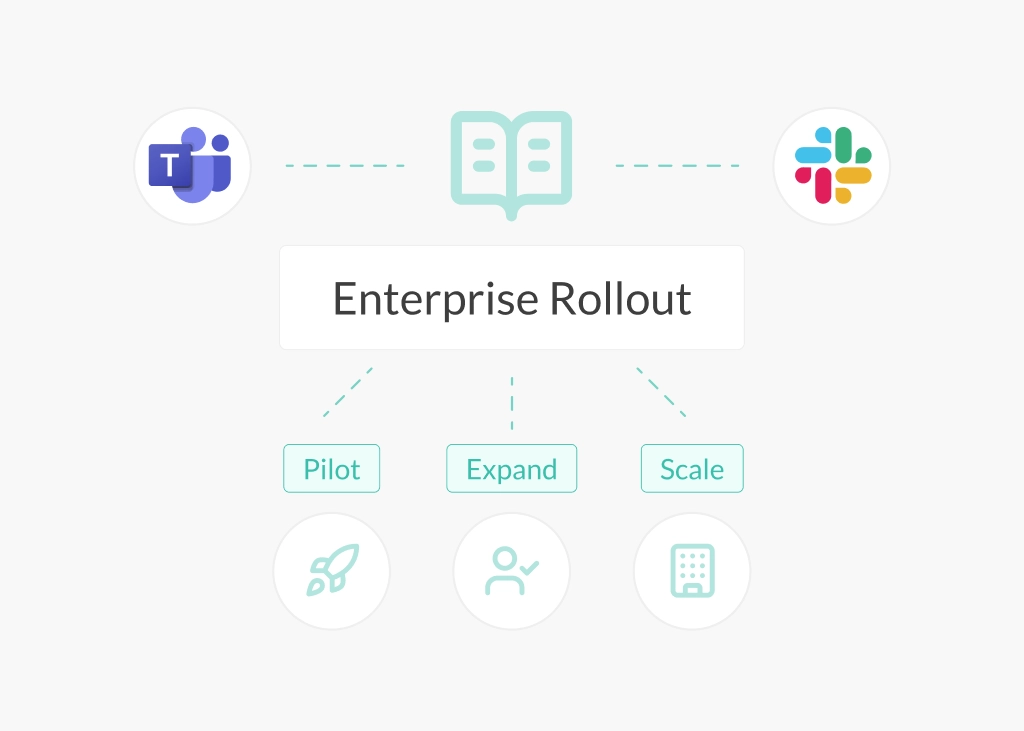
Day 1 integration coordination – integration leads, IT, HR, and leadership teams connect shared Slack and Teams channels to coordinate Day 1 activities, announcements, and dependencies without forcing tool changes or relying on email during the most sensitive phase of the merger.
Leadership visibility across organisations – executives and integration managers follow shared channels and chats on Slack and Teams, giving them a unified view of decisions, risks, and progress without asking teams to duplicate updates.
Security and compliance alignment – security and IT teams share policies, alerts, and updates by connecting platforms, ensuring both organisations stay aligned without falling back to email or informal workarounds that create compliance and audit gaps.
External and subsidiary collaboration – acquired teams, subsidiaries, or partners connect to specific parent-company channels without full workspace access, enabling secure collaboration while preserving organisational and system boundaries.
Engineering and product collaboration without disruption – acquired engineering teams remain on Slack with their existing workflows, bots, and automations, while other stakeholders on Microsoft Teams see updates in real-time, avoiding disruptions during integration.
Cross-functional dependency management – product, IT, operations, and engineering teams coordinate dependencies across platforms, reducing delays caused by waiting on updates posted in a tool only half the organisation uses.
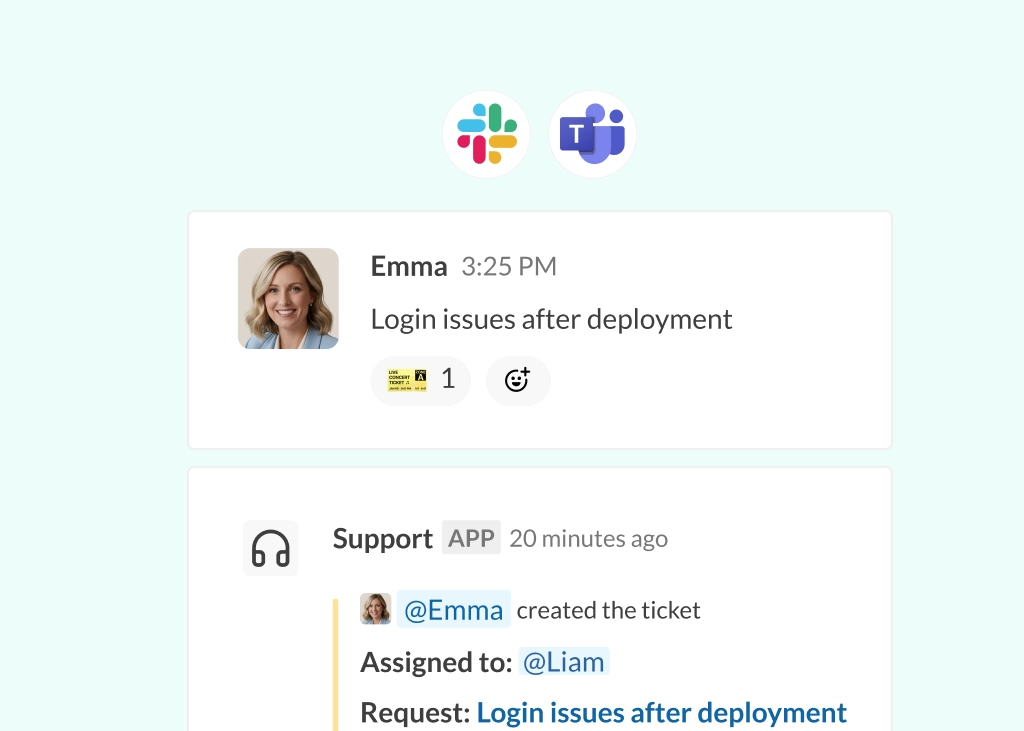
Support escalation visibility (without ticket consolidation) – core support or escalation channels are connected so engineers, support leads, and managers see critical updates in real-time – even when tickets live in different systems.
Reduced burnout during integration – teams spend less time context switching or searching for information across platforms, reducing frustration and duplicated work. At scale, this supports higher engagement and retention during a period when both matter most. Explore how to prevent silo mentality in the workplace.
Support Tickets and Issue Management Tools
While ticketing systems like Jira and Zendesk are important, they are rarely the first blocker during an acquisition. The bigger challenge is communication around tickets – updates, clarifications, escalations, and status changes across Slack and Microsoft Teams.
Conclude Connect addresses the core communication problem first. For teams that need it, Conclude Apps also integrates with Jira and Zendesk, without forcing ticketing consolidation during integration. This keeps ticketing updates visible where teams already work, while allowing organisations to delay system-level decisions until later in the integration process.
Connect Teams Before Consolidating Tools
Cross-platform communication does not need to slow down M&A integration. Conclude Connect enables teams to collaborate immediately across Slack and Microsoft Teams without forcing migration, disrupting workflows, or creating new operational risk.
Instead of consolidating tools too early, organizations can focus on what matters most during integration – maintaining visibility, keeping decisions aligned, and ensuring nothing gets missed. Teams stay in the tools they know, while leaders gain a shared view across both organisations.
By resolving communication first, integration work moves faster, coordination improves, and value realization is no longer delayed by platform differences.
Conclude Connect can unify your teams during M&A processes. Try it free for 14 days – get started here or book a demo.
Frequently Asked Questions
How do companies integrate Slack and Microsoft Teams during a merger?
In practice, most teams either standardize on one platform or rely on workarounds like copying updates and using email. If you need to integrate Slack and Teams during a merger without disrupting workflows, you need a real-time bridge like Conclude Connect, so channels and chats stay aligned while longer-term migration decisions are made.
Should we migrate to one chat platform during an M&A or connect them first?
In most cases, connecting platforms first is the safer option. Migrating during an M&A disrupts workflows, breaks automations, and creates resistance among teams. Connecting Slack and Teams allows communication to continue uninterrupted while organisations delay migration decisions until systems, policies, and processes are ready.
What are the biggest communication challenges during post-merger integration?
Teams are split across Slack and Microsoft Teams, updates are duplicated or missed, and leaders lack a shared view of decisions. This leads to heavy context switching, email workarounds, and slower integration. Conclude Connect solves this by linking Slack and Teams channels and chats in real-time, keeping communication aligned without migration.
Can Slack and Microsoft Teams be connected without moving chat history?
Yes. Using Conclude, channels and chats can be connected with no history, partial history, or a single context-setting message. This lets teams collaborate immediately without migrating past conversations.
Is connecting Slack and Teams secure and compliant during an acquisition?
Yes, when done through a compliant solution. Conclude Connect is SOC 2 Type II and HIPAA compliant, reducing reliance on email and informal workarounds while maintaining auditability during integration.
How quickly can teams communicate across Slack and Teams after Day 1?
Immediately. Once channels or chats are connected, messages sync in real-time, allowing teams to collaborate from Day 1 without migration or workflow disruption using Conclude Connect. This means announcements, updates, and escalations appear on both sides without migration, new logins, or changes to existing workflows.