Break Down Silos At Work: Collaboration Maturity Model
 Conclude Team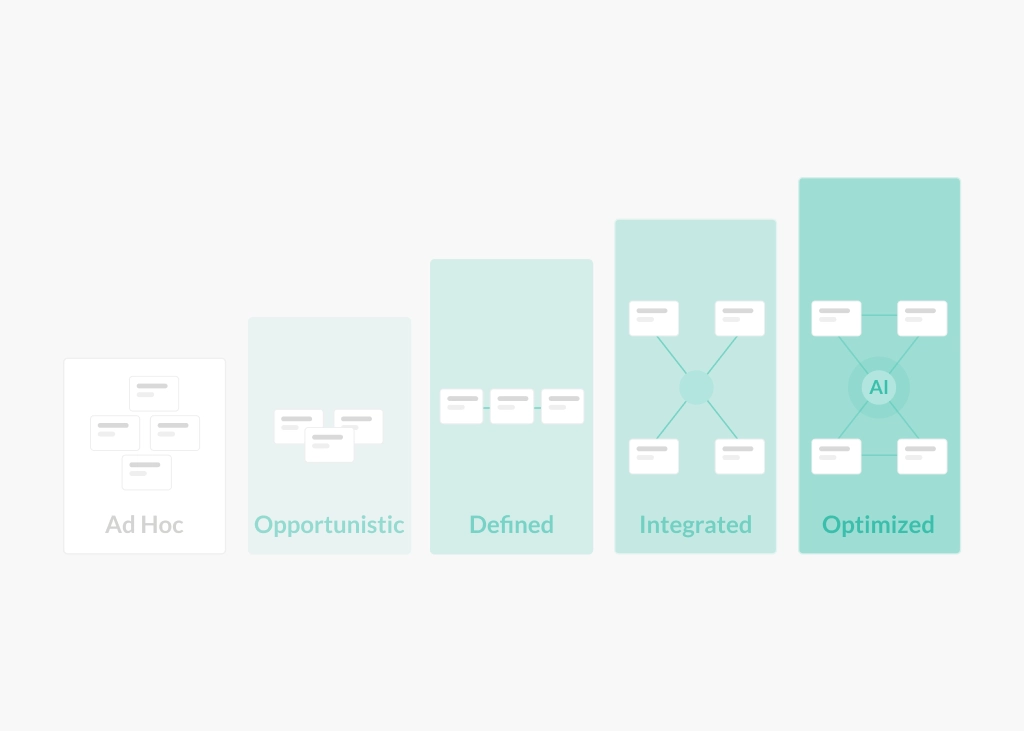
As organizations grow, collaboration gets harder to manage.
Teams split across departments, adopt different tools, and build their own ways of working. Over time, information stays within those boundaries. Updates are missed, conversations happen in separate places, and teams spend more time chasing context than moving work forward.
Most companies already invest in collaboration tools – but having tools in place doesn’t guarantee better collaboration. In many cases, it becomes harder, not easier, to break down silos. The real problem isn’t the tools themselves. It’s understanding where collaboration is breaking down, and what needs to change to fix it.
That’s where the collaboration maturity model comes in: a framework that helps organizations assess their current state of collaboration, identify where silos are forming, and take targeted steps to address them.
In this article, you’ll learn what the collaboration maturity model is, how to identify which stage your organization is at, and what you can do to move toward more connected, effective collaboration.
Why Silos Exist in Large Organizations
Silos form as a result of how enterprises are structured and scaled. Most organizations operate in departments with defined responsibilities and goals, and while this supports specialization, it also limits the flow of information between teams.
Tool fragmentation becomes common, especially with enterprise collaboration tools like Slack and Teams, which often create communication gaps. In some cases, employees rely on informal workarounds or introduce additional tools to stay aligned, creating a layer of shadow IT that further disconnects communication across the organization.
The impact shows up in day-to-day work. A Forrester study found that employees lose up to 12 hours per week searching for information trapped in silos. At the same time, context switching is hurting team productivity. Research from the University of California, Irvine shows that it takes an average of 23 minutes to fully refocus after an interruption.
Without a shared approach to cross-team collaboration, work depends on manual coordination rather than structured workflows. And as organizations become more complex – with distributed teams and multiple business units – maintaining visibility becomes even harder.
What Is a Collaboration Maturity Model?
The collaboration maturity model (sometimes referred to as a collaboration maturity matrix) is a framework for assessing how effectively an organization collaborates across teams, tools, and processes.
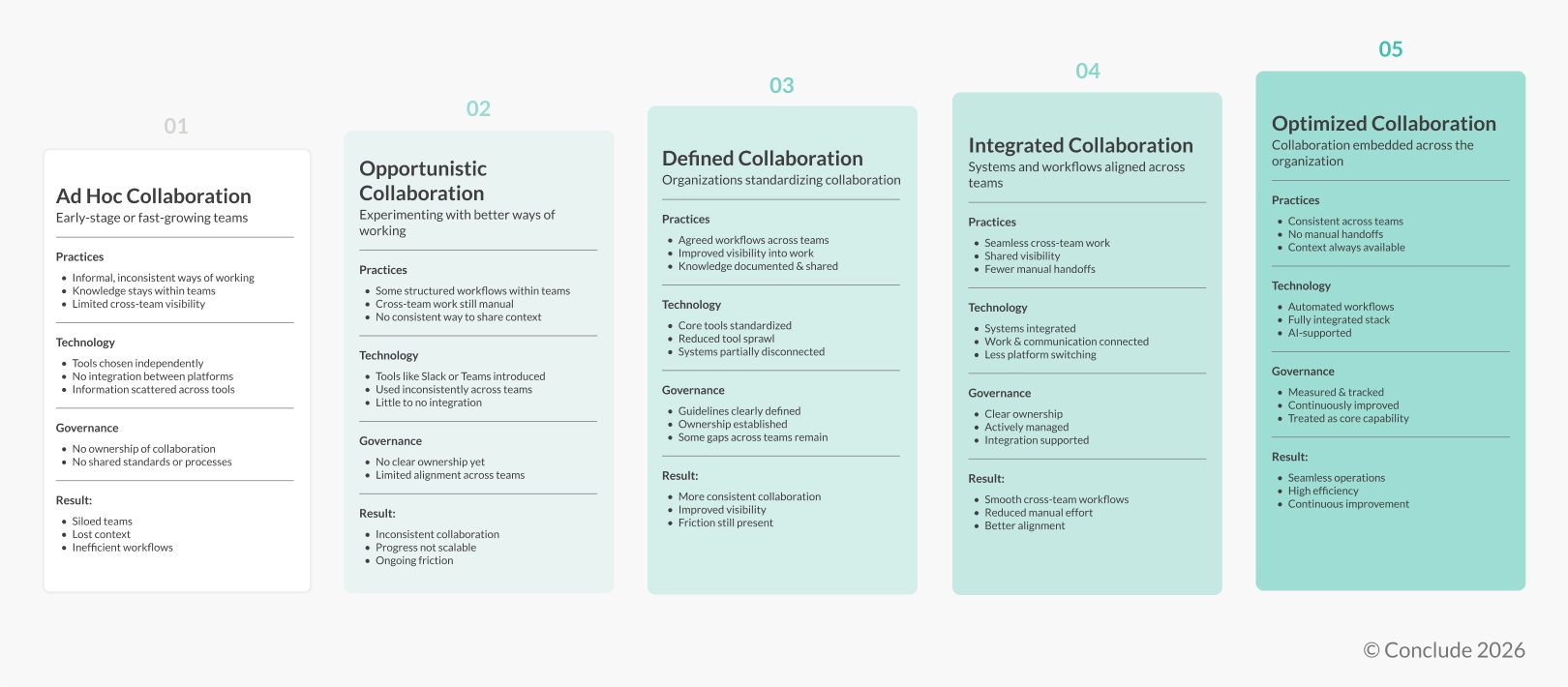
Collaboration is broken down into a series of stages, each representing a different level of maturity - from siloed, inconsistent ways of working through to fully connected, organization-wide collaboration.
Each stage is defined by observable characteristics: how teams communicate, how work is coordinated, and how tools are used across the organization. Looking at these together makes it easier to understand how collaboration actually functions in practice.
There are many versions of this model, and they vary in how they name the stages and categorize characteristics. Some large enterprises even develop their own based on the tools and ecosystems they use, such as Microsoft’s collaboration maturity model.
Regardless of the structure, the purpose remains the same: to serve as a reference point for evaluating your current state of collaboration and guiding the steps needed to improve it.
The Five Levels of the Collaboration Maturity Model
Organizations don’t move from silos to fully connected collaboration in one step. Progress happens in stages as communication becomes more structured and tools start to work together.
We’ve broken down the five stages of collaboration maturity so you can identify where your organization sits today, and what progress looks like in practice.
Stage1 – Ad Hoc Collaboration
Ad hoc collaboration is most common in early-stage or rapidly growing organizations where formal structures are not yet in place. Collaboration is informal and inconsistent across the organization.
- Collaboration Practices: Teams rely on whatever email or chat tools are already available, such as Google Chat, because they’re convenient – but communication is fragmented and teams have limited awareness of how tools could improve the way they work. As a result, knowledge tends to stay within the teams that created it
- Technology: Tools are chosen independently, resulting in a mix of platforms that don’t integrate or communicate with one another
- Governance: There is no shared approach to collaboration or clear ownership of how it should work. Each team defines its own processes, with limited visibility across the organization
At this stage, silos are a natural by-product - collaboration is difficult to manage across teams, and there is no shared foundation to build on.
Stage 2 – Opportunistic Collaboration
During this stage, organizations begin experimenting with better ways of working, often driven by individual teams rather than a coordinated effort. Early progress is visible, but inconsistent and not yet scalable.
- Collaboration Practices: Some teams adopt more structured ways of working, but practices remain local. Cross-team collaboration still relies on manual effort, with no consistent way to maintain context across departments
- Technology: The organization becomes aware of tools that could improve collaboration and begins exploring options such as Slack and Microsoft Teams. However, these tools are used separately and without integration, which keeps information fragmented
- Governance: There is no clear ownership or guidelines for collaboration yet, but interest is growing. Some teams move faster than others, and without broader alignment, progress is difficult to scale
Collaboration at this stage is exploratory – the organization is learning what works, but progress is uneven and not yet tied to a clear strategic direction.
Stage 3 – Defined Collaboration
Mid-sized or scaling enterprises that are beginning to standardize how their teams work together are typically at this stage. Collaboration becomes more consistent across the organization, with shared practices and clearer ways of working starting to take hold
- Collaboration Practices: Teams align on how they communicate and coordinate work. Visibility improves across departments, and knowledge is more consistently documented and shared
- Technology: Tools are more standardized, reducing fragmentation. However, systems are still split by function, with different departments using separate tools that don’t always integrate smoothly
- Governance: Clearer guidelines and ownership begin to emerge, though cross-team work can still be slowed by gaps between tools and processes
Collaboration is now more structured and visible across teams, but gaps between systems and workflows still create friction.
Stage 4 – Integrated Collaboration
This stage is typical of mature enterprises that are actively aligning systems and workflows across teams. Collaboration has become a consistent, integrated experience.
- Collaboration Practices: Teams collaborate more seamlessly across departments, with shared visibility into work and fewer manual handoffs. Context no longer needs to be repeated or manually passed between teams
- Technology: Tools and systems are integrated, allowing work and communication to happen in connected environments. Platform switching is reduced, making it easier to follow conversations and track progress
- Governance: Ownership is clearly defined, and collaboration is actively managed as part of a broader strategy. IT teams actively manage integrations and collaboration infrastructure, ensuring consistency and reducing friction as work moves across teams
Collaboration becomes embedded in how work flows across the organization, rather than something teams have to manage manually.
Stage 5 – Optimized Collaboration
Optimized collaboration is the most advanced stage, typically found in digitally mature organizations where collaboration is fully embedded into how the business operates.
- Collaboration Practices: Teams work consistently across departments without friction or manual adjustment. Context is always accessible, without relying on manual updates or handoffs
- Technology: Tools are automated, connected, and enhanced by AI. Cross-collaboration platforms, workflow automations, and integrations ensure work moves seamlessly across systems, without breaking context or requiring users to switch tools
- Governance: Collaboration is treated as a core business capability, with clear accountability and regular reviews to measure performance and continuously improve how work gets done
The organization operates as a seamless system: efficient, measurable, and continuously optimized.
How Enterprises Can Move Up the Collaboration Maturity Model
Improving collaboration across an entire organization can feel overwhelming, and it’s not something that changes overnight. But a few well-chosen, high-impact changes can significantly improve alignment and reduce friction across teams.
Here are our top recommendations that drive the most meaningful results:
Establish a Collaboration Governance Framework
A collaboration governance framework defines how collaboration tools, processes, and decisions are managed across the organization, ensuring teams don’t work in silos or introduce conflicting ways of working.
Without clear governance, collaboration evolves through disconnected decisions, and teams adopt tools, create workflows, and set their own standards without visibility into the broader impact, quickly leading to fragmentation.
A governance charter creates alignment by establishing:
- Clear ownership of collaboration tools, standards, and workflows
- Defined decision-making for tools, integrations, and changes
- Shared standards for how teams communicate and collaborate
- Ongoing evaluation to ensure improvements are consistent and scalable
Clear ownership prevents collaboration from evolving through disconnected decisions.
Set Up Automation and Integrations Between Tools
Automation and integrations connect the tools teams use, so actions, updates, and information move between systems automatically. Instead of manually copying information or coordinating across platforms, teams can trigger workflows directly from where work is already happening.
Teams don’t need to copy updates between tools, chase information, or switch platforms to keep work moving. Information stays consistent, and work progresses with fewer gaps between teams and systems.
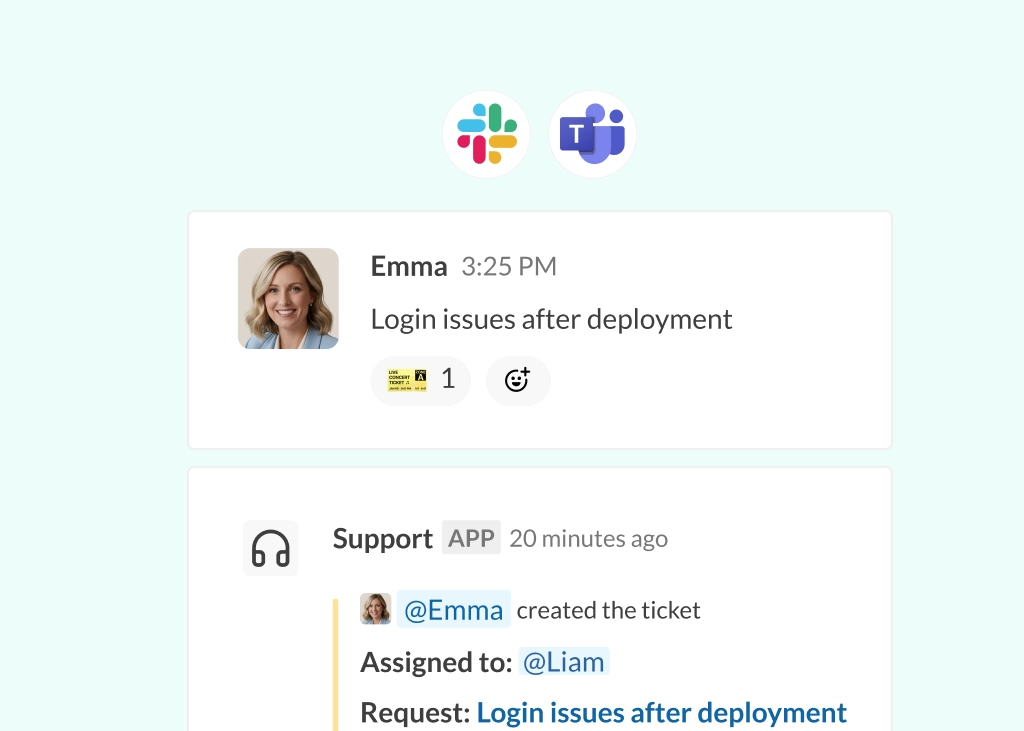
Conclude Apps is a ticketing solution for Slack and Microsoft Teams. Install it on either platform to manage internal tasks and tickets, with optional integrations for Zendesk and Jira to keep tickets and workflows in sync across tools.
Teams can:
- Create and manage tickets directly from their chat platform
- Sync ticket updates in real-time between messaging and ticketing systems
- Track and manage tickets from a centralised dashboard, with metrics to monitor trends and response times across teams
With the upcoming release of Connected Apps, ticketing will extend across linked Slack and Teams channels, allowing teams to collaborate on the same tickets from either platform. Conclude is also introducing more agentic AI capabilities in 2026.
Standardize on a Core Collaboration Stack
Standardizing a core collaboration stack means defining a set of tools that teams use consistently across the organization – reducing unnecessary overlap and creating shared environments where communication and work take place.
This helps organizations:
- Reduce duplication across similar tools
- Create more predictable communication patterns
- Find information and track work across teams more easily
However, reducing tools to a single unified stack isn’t always realistic for larger enterprises, especially when it comes to communication. Many teams rely on deeply embedded systems and established workflows that can’t easily be replaced. That’s when cross-platform communication becomes the best alternative.
Implement Cross-Platform Communication to Break Down Silos
Cross-platform communication allows teams using different collaboration tools to communicate in real time without switching platforms. Instead of forcing everyone onto one tool, it connects systems so conversations, updates, and context flow freely between them.
This helps organizations:
- Connect teams working on different messaging and ticketing platforms
- Reduce delays caused by tool boundaries
- Avoid duplicating communication across systems
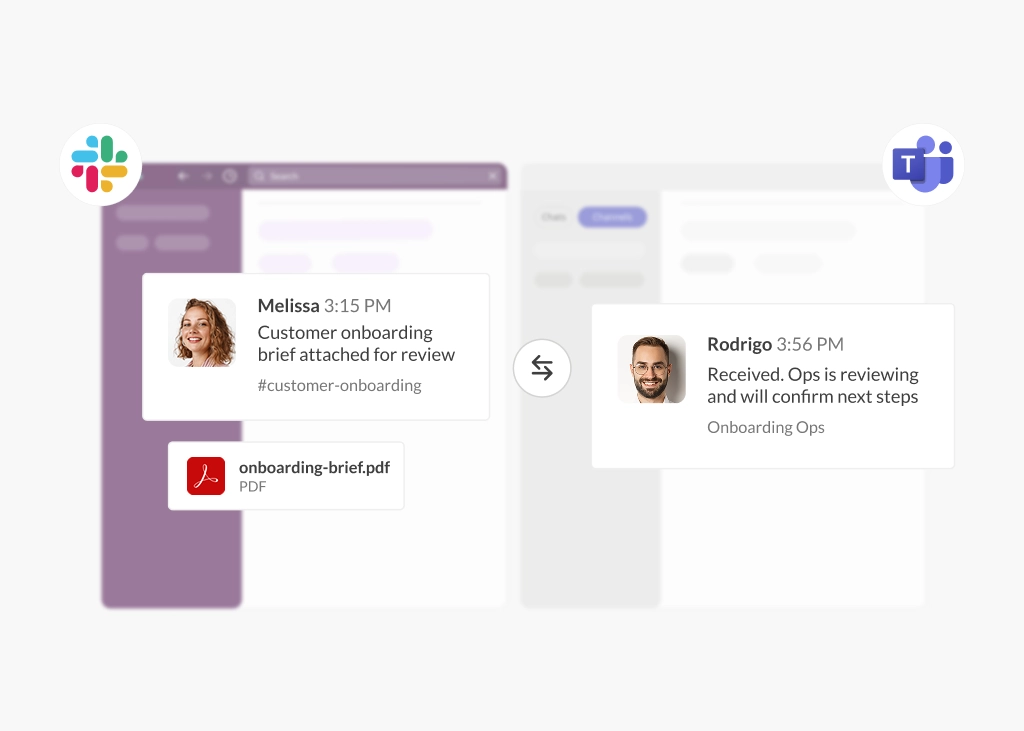
Conclude Connect is a cross-platform collaboration solution that integrates Slack and Microsoft Teams chats and channels across large organizations – it can also be used for cross-company collaboration with partners, customers and clients. Teams stay on the platform that works best for them, while remaining fully aligned with colleagues on the other side.
For a practical walkthrough, see this guide on how to connect Slack and Microsoft Teams.
Run Collaboration Assessments Across Teams
Collaboration assessments are structured, recurring sessions where teams review how collaboration is working across the organization.
They provide the opportunity to identify friction, align on better ways of working, and turn successful practices into shared standards.
These sessions typically focus on:
- Evaluating what’s working well across the organization
- Identifying gaps between teams, tools, or workflows
- Sharing examples of effective collaboration that other teams can adopt
- Agreeing on improvements that can be applied more broadly
Regular review helps prevent collaboration issues from becoming embedded in day-to-day work. Over time, your organization creates a feedback loop where collaboration is continuously improved, rather than left to evolve on its own.
From Siloed Teams to Connected Enterprises
Workplace silos don’t appear by accident. In large enterprises, they’re often the result of unclear ownership, disconnected tools, and a lack of structure around how collaboration should work.
Collaboration maturity models help you step back and understand how collaboration actually functions across your organization today, where the gaps are, and what needs to change to move forward. Instead of treating silos as a workplace culture issue, you can address them as a structural one, with a clear path toward more connected, scalable collaboration.
There’s no single way to improve collaboration maturity. Some organizations start with governance, creating clearer ownership and standards, while others focus on reducing friction between tools. In many cases, the biggest impact comes from integrating the platforms teams already rely on with solutions like Conclude Connect and Conclude Apps.
Ready to move towards the optimized collaboration stage? Start a 14-day free trial with Conclude.
Frequently Asked Questions
What does it mean to break down silos at work?
Breaking down silos at work means ensuring that information flows freely across teams and tools without manual effort. Instead of knowledge being locked within specific teams or systems, communication becomes more transparent, connected, and easy to follow. This helps teams stay aligned, reduces delays, and makes it easier to collaborate across the organization.
What is a collaboration maturity model?
A collaboration maturity model is a framework for assessing how effectively an organization collaborates across teams, tools, and processes. It helps organizations understand their current level of collaboration, identify gaps or inefficiencies, and outline stages of progress, providing a clear roadmap for more connected, consistent, and optimized ways of working.
What are the stages of collaboration maturity?
There are five stages of the collaboration maturity model: ad hoc, emerging, defined, integrated, and optimized. Different models may use slightly different names for these stages, but they all reflect how collaboration evolves from siloed and inconsistent to more structured, connected, and scalable across the organization.
Why do silos happen in large organizations?
Silos happen when teams work in isolation, using different tools, processes, and workflows, without shared systems or coordination. As organizations grow, this lack of alignment makes it harder for information to flow across departments, causing communication to stay within teams instead of reaching the wider organization.
How can enterprises improve collaboration across teams?
There are several practical ways enterprises can improve collaboration across teams, combining both structural changes and technology, by:
- Defining clear governance to align how teams communicate, use tools, and manage workflows
- Standardizing and connecting core tools to reduce fragmentation and improve visibility
- Integrating systems and automating workflows so that information flows without manual effort
- Enabling cross-platform communication to connect teams across Slack and Microsoft Teams using solutions like Conclude Connect
- Connecting ticketing workflows for IT, support, and engineering teams, enabling updates and collaboration across tools through solutions like Conclude Apps with Zendesk and Jira integrations